
For my first blog post I want to share one of the wonderful little creatures that frequent my native home landscape, and how they connect to a greater ecological issue.
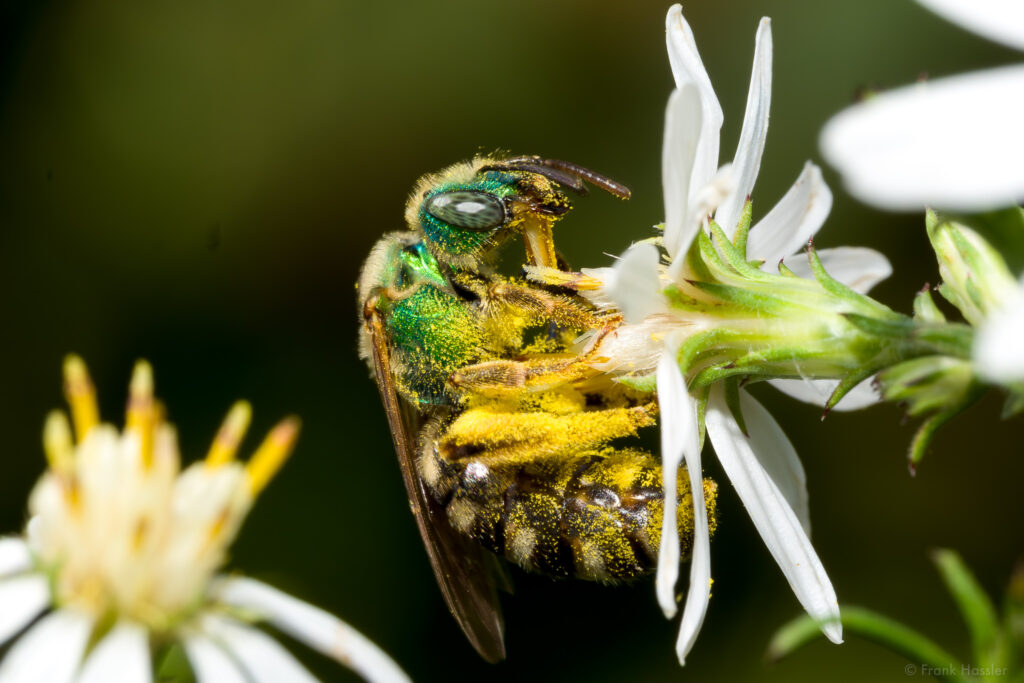
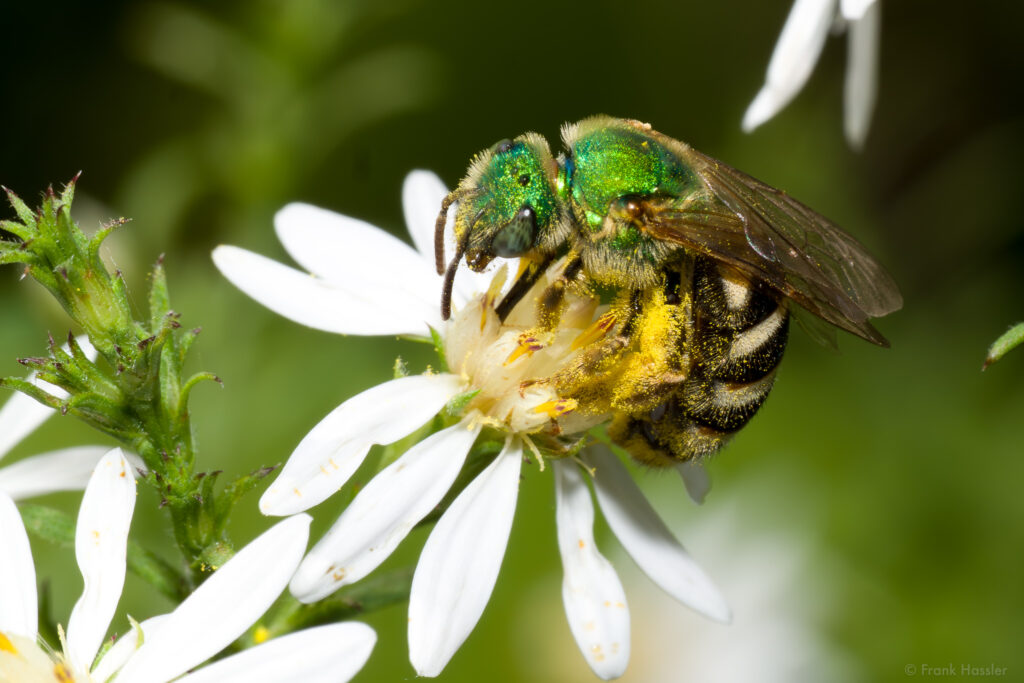
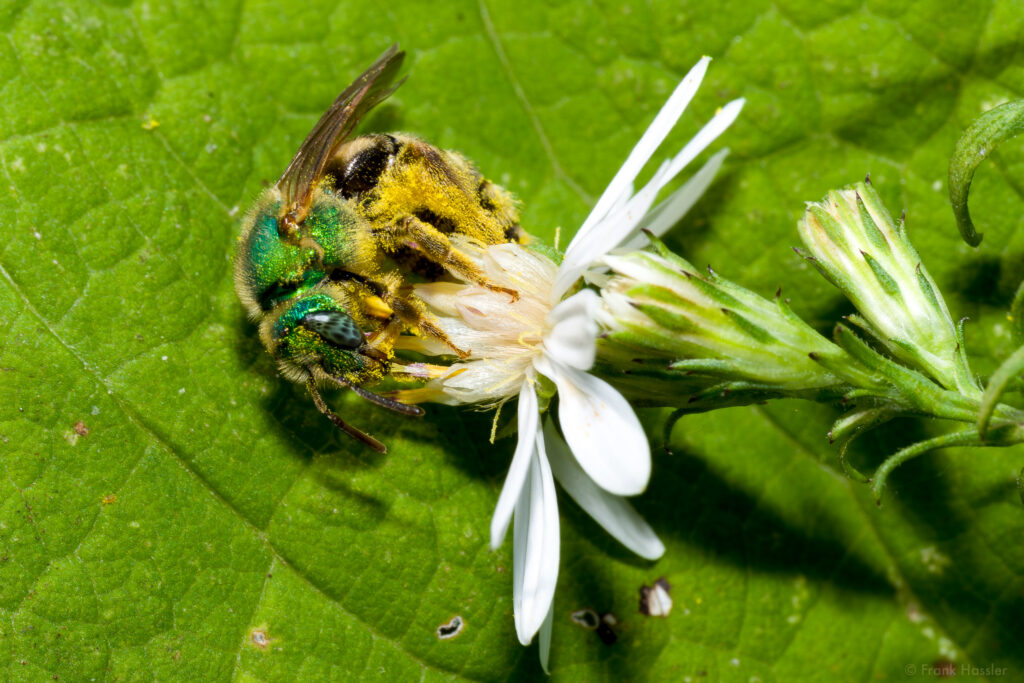
This is a green metallic sweat bee. I’m no expert, but my best guess is that these are female bi-colored Agapostemon (Agapostemon virescens). These native bees are active throughout most of the growing season, feeding on legumes, sunflowers, asters and similar flowers. They are ground-nesting, and though they are technically solitary bees, then tend to be “gregarious”, with many individuals nesting in the same area and sharing guard duty.
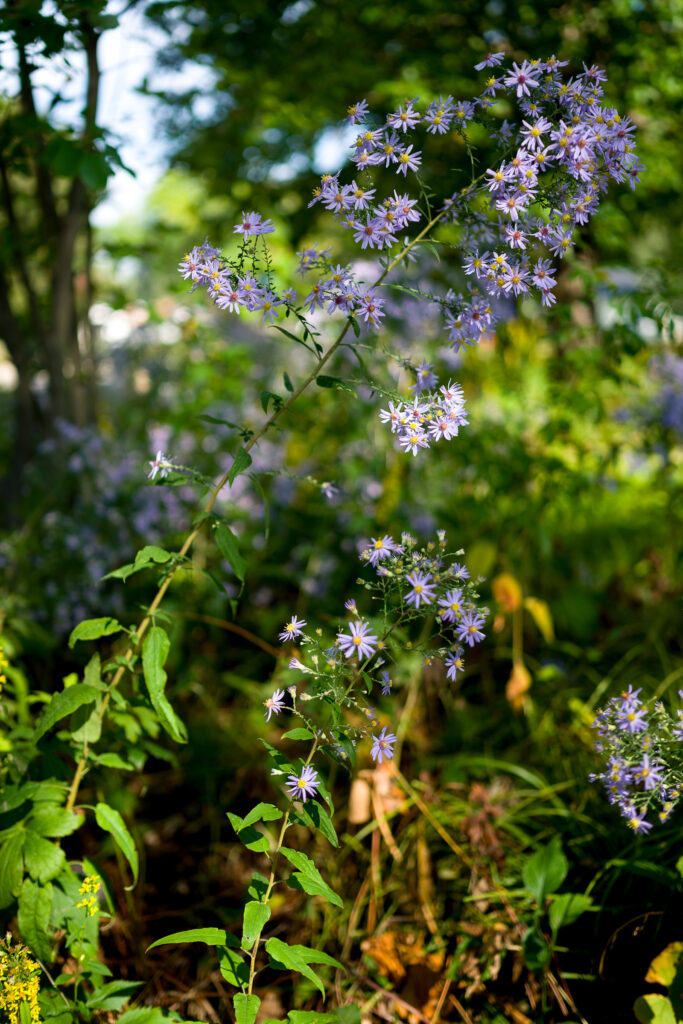
Its feeding on arrow-leaved aster (Symphyotrichum urophyllum) which is probably our most common woodland aster. This aster is the one you’ll see on shaded wooded roadsides. Unfortunately, these days, they are largely restricted to the edges of woodlands. Because of a lack of management, our woodlands have become over-shaded, and cannot support wildflowers in the ground layer. And with the loss of the flowers, we also lose the pollinators.
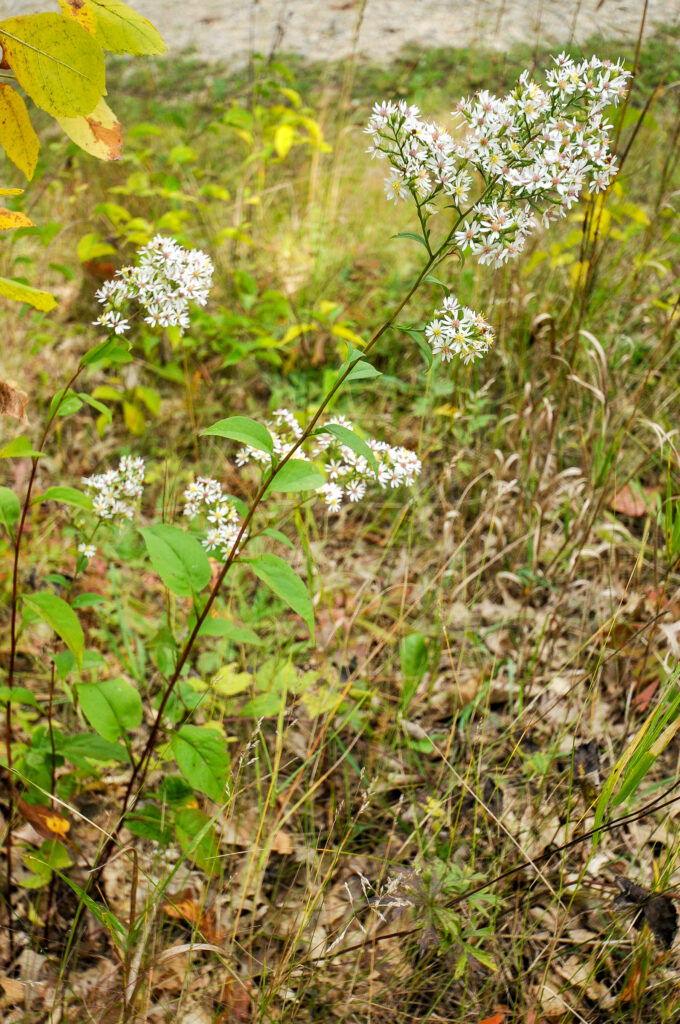
But removing invasive brush and weedy trees can return light to the ground layer, bringing back the flowers and the pollinators. It’s a lot of work, but critical if we want our woodlands to support wildlife from deer to bees. In the shady wildflower garden, you can plant arrow-leaved aster, which is a tough native that can withstand some disturbance and less-than ideal conditions. However, I prefer the more showy Short’s aster, with its more showy lavender flowers and tidy structure.
To learn more, here are a couple great books and two websites that helped me with my research:
- The Bees in your Backyard by Joseph S. Wilson & Olivia Messinger Carril
- Pollinators of Native Plants by Heather Holm
- Backyard Ecology
- ID Guide to Wild Bees – New York